
· By Laurie Arena
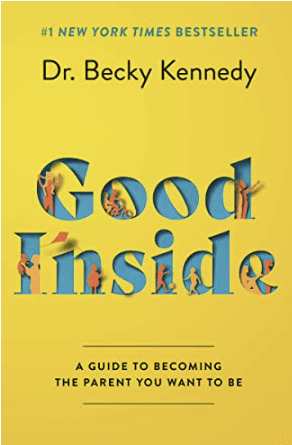
Book Recommendation: Good Inside by Dr. Becky Kennedy
Book Recommendation and Summary: "Good Inside" by Dr. Becky Kennedy
Read more
· By Joshua McKelvey
What is Health Coaching?
A health coach skeptic's view on being a health coach.
Read more

· By Joshua D Mckelvey
What does Anxiety Look Like to You?
Anxiety can show up as irritability, especially when it overloads attention and working memory. Research suggests CBT, DBT skills, slow breathing, brief attention training, mindfulness/acceptance, and deliberate relationship repair can help interrupt the cycle. The core idea: notice the overload earlier, regulate before reacting, and take responsibility for behavior without turning it into self-condemnation.
Read more
· By Joshua D Mckelvey
ACT Wise
Wisdom research suggests that wise functioning involves humility, perspective-taking, emotional regulation, openness, tolerance of uncertainty, and concern for others. ACT overlaps with many of these capacities through psychological flexibility, especially acceptance, defusion, self-as-context, values, and committed action. The key distinction is that ACT helps us relate more flexibly to our inner experience, while wisdom research asks how we use that flexibility to reason and act well in complex situations.
Read more
· By Joshua D Mckelvey
Emotional Regulation Under Stress
Emotional regulation under stress is not about eliminating emotions. It is about creating enough space to respond flexibly and act in ways that still fit our values and goals. Research suggests that effective regulation draws on multiple systems, including physiological calming, attentional control, cognitive reframing, psychological flexibility, practiced coping skills, movement, sleep, purpose, and social support. Mindfulness, CBT, ACT, and DBT each appear to target different parts of this process, with generally modest but meaningful benefits depending on the context and population. The most practical takeaway is that regulation works best as a system: notice activation, reduce intensity when needed, interrupt rumination, question interpretations, make room for difficult feelings, and choose the next action deliberately rather than reactively.
Read more
· By Joshua D Mckelvey
What Mindfulness Practices Actually Work Best?
Mindfulness is not one single practice, and the research does not identify a universally “best” meditation. Instead, different practices appear to train different skills. Focused attention is most closely linked to improvements in attention and executive control; open monitoring may help with rumination and cognitive reactivity; body-focused practices support awareness of emotional and physiological signals; and loving-kindness may be especially useful for self-compassion. The strongest evidence generally supports structured programs such as MBSR and MBCT rather than isolated techniques. Neuroscience suggests mindfulness involves attention, emotion regulation, interoception, and self-related processing, but these mechanisms are still being clarified. Overall, mindfulness appears most useful for building psychological flexibility: noticing experience more clearly, becoming less automatically reactive to thoughts and emotions, and choosing behavior more deliberately.
Read more
· By Joshua D Mckelvey
The Five-ish Pillars of Well-being
Well-being is not the same thing as happiness. It is a broader pattern involving how we feel, how effectively we function, whether our lives have meaning and direction, whether we feel connected to others, and whether our circumstances give us a reasonable foundation on which to build.
Read more
By Laurie Arena, PMHNP, MSW, MSN Healthy Eating for Kids: A Uphill Climb You Don't Have to Make Alone
Healthy Eating for Kids: A Uphill Climb You Don't Have to Make Alone
Read more
· By Joshua D Mckelvey
Agency & Autonomy: Why feeling like the Author of Your Life Matters
Agency & Autonomy is the experience of having meaningful choice, influence, and authorship in your life. Research links greater autonomy with better well-being across ages and cultures, while coercion and restricted agency are associated with distress. The practical takeaway is not “control everything,” but learn where you have real influence, act from self-endorsed reasons, and recognize when the environment itself needs to change.
Read more
· By Joshua D Mckelvey
Connection & Belonging: Why Relationships Matter More Than We Think
Connection and belonging are core parts of well-being, but they are about more than simply having people around. What matters is whether relationships provide acceptance, support, trust, reciprocity, and a sense that we matter. Healthy connection can come from a few close relationships, meaningful community involvement, and regular opportunities to contribute. The science also suggests that loneliness is not one single problem, so improving connection may require strengthening relationships, building community, developing social skills, or changing circumstances that make connection difficult.
Read more
· By Joshua D Mckelvey
Safety Is The Environment In Which Well-Being Exists
Safety does not guarantee well-being, but it profoundly shapes how difficult well-being is to build and sustain. When people live with violence, abuse, instability, or persistent threat, emotional health, autonomy, connection, growth, meaning, sleep, and physical functioning all become harder to support. Safety is therefore best understood as a foundation of well-being: not the whole structure, but part of the ground everything else must stand on.
Read more
· By Joshua D Mckelvey
Batman, God and the Meaning of Life
Meaning and purpose do not require a grand destiny, religious calling, or Batman-sized mission. Instead, well-being rests on three interconnected experiences: making sense of our lives, having meaningful directions to pursue, and feeling that we matter. Healthy purpose is flexible, shaped by our circumstances, and built through everyday relationships, routines, values, and activities that give our time and energy direction.
Read more
· By Joshua D Mckelvey
Feeling Bad isn't Failing
Emotional well-being isn’t about feeling good all the time. It’s about experiencing emotions without being ruled by them, responding to yourself without unnecessary self-attack, and recognizing when distress calls for coping and when it’s telling you something in your life needs to change.
Read more
· By Joshua D Mckelvey
Growth Without the Grind
Growth and mastery are not about constant self-improvement or achievement. They are about becoming more capable of handling life's meaningful demands while staying open to learning and change. Research suggests that specific practice, feedback, intentional planning, and supportive environments matter more than vague motivation or confidence alone. Healthy growth can also include rest, maintenance, adaptation, and recognizing when something is already good enough.
Read more
· By Joshua D Mckelvey
Want to Change Your Behavior? Here's What Actually Works.
Changing your behavior isn't just about willpower. Research shows that lasting change is more likely when we set specific goals, make realistic plans, remove obstacles, build supportive environments, and repeat behaviors consistently. The key isn't perfect discipline. It's creating conditions that make good habits easier to start, maintain, and return to when life gets in the way.
Read more
· By Joshua D Mckelvey
Taking the Reins: Attention, Choice, and the Practice of a Better Life
Taking control of our lives doesn't mean controlling every thought, emotion, or circumstance. Research on well-being, meditation, and behavior change suggests that we can cultivate greater awareness, respond more skillfully to difficult experiences, and build healthier habits through intentional practice.
Read more
· By Joshua D Mckelvey
The Weight of Poverty: How Economic Insecurity Shapes Our Ability to Flourish
Poverty is more than a lack of money. It affects nearly every dimension of well-being, from physical and mental health to autonomy, relationships, personal growth, and our ability to pursue meaningful lives.
Read more
· By Joshua D Mckelvey
Empowerment: More Than the Confidence to Change Your Life
Empowerment is more than confidence, independence, or personal responsibility. It is the ability to meaningfully influence our lives through a combination of knowledge, skills, supportive relationships, resources, and real opportunities for action. Research shows that empowerment can improve well-being, participation, and personal agency, but individual effort alone cannot overcome structural barriers. Genuine empowerment requires both developing people's capabilities and creating social conditions that allow those capabilities to be exercised. It is not simply helping people believe they can change their lives. It is ensuring they have a meaningful opportunity to do so.
Read more